Understanding Stroke and How Neuropsychological Assessment Can Help
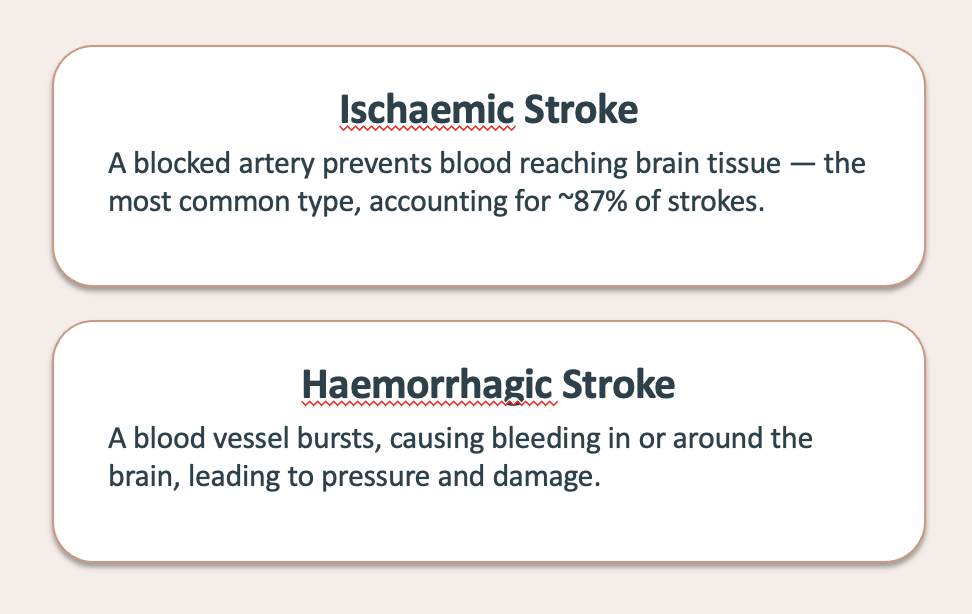
A stroke occurs when blood supply to part of the brain is suddenly interrupted — either by a blocked artery (ischaemic stroke) or a burst blood vessel (haemorrhagic stroke). When brain cells are deprived of oxygen, they can be damaged or die within minutes, affecting functions controlled by that area of the brain.
What Happens After a Stroke?
Stroke can affect many aspects of daily functioning, including movement, speech, and sensation. However, the effects that are often least visible — and least talked about — are the cognitive changes.
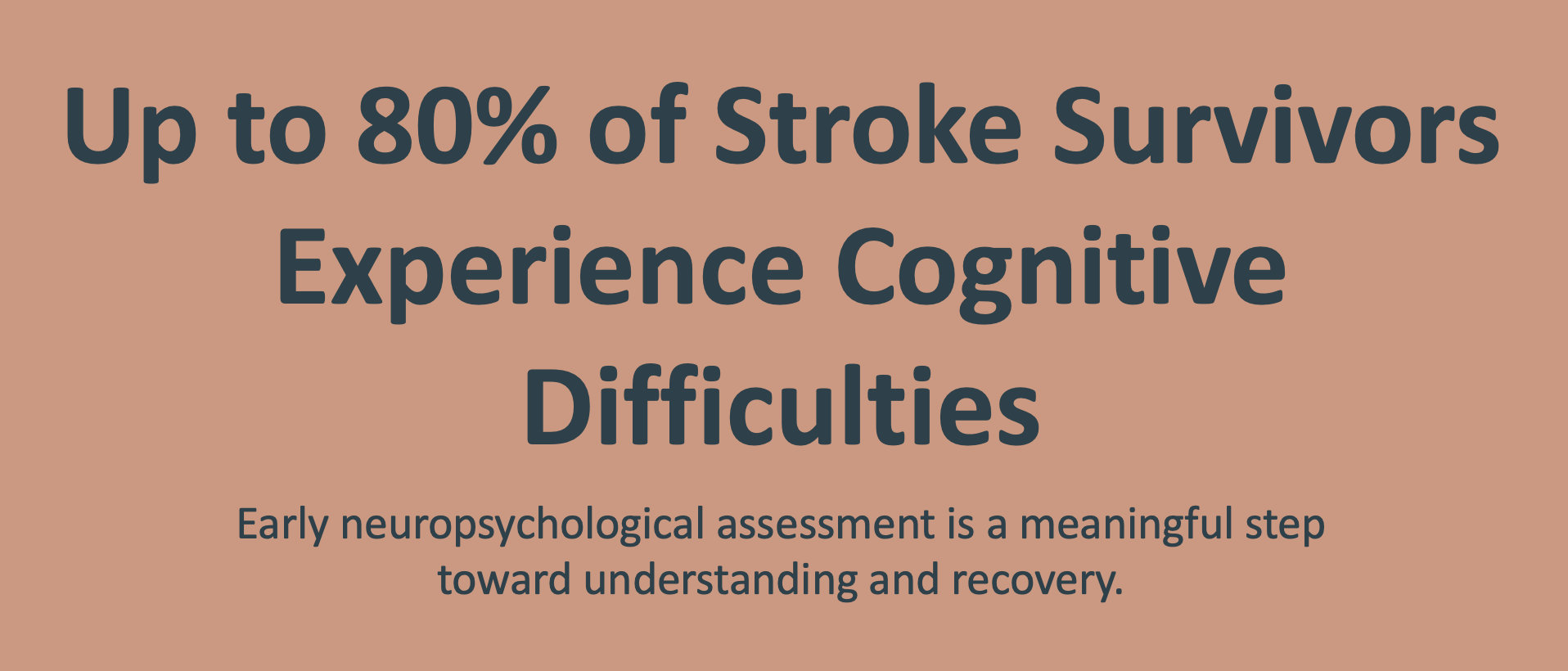
Research suggests that cognitive difficulties occur in up to 80% of stroke survivors across at least one area of thinking, and persist for a significant proportion of people long after discharge from hospital.[1] The most commonly reported cognitive challenges include:
· Memory — difficulty learning new information or recalling recent events
· Attention and concentration — easily distracted, struggling to focus on tasks
· Executive function — problems with planning, organisation, problem-solving, and self-monitoring (affecting up to 75% of survivors)[2]
· Processing speed — thinking and responding more slowly than before
· Visuospatial skills — difficulty judging distances, navigating spaces, or recognising objects[3]
· Emotional and psychological changes — depression, anxiety, and emotional lability are also common[4]
These difficulties can profoundly impact independence, relationships, the ability to return to work, and quality of life — even when physical recovery appears to be going well.
How Can Neuropsychological Assessment Help?
A neuropsychological assessment is a comprehensive evaluation of your cognitive strengths and weaknesses. Using standardised tests, a neuropsychologist builds a detailed profile of how different areas of your brain are functioning following the stroke.
Australian and New Zealand stroke guidelines recommend that survivors with suspected cognitive difficulties be referred for comprehensive neuropsychological assessment.[5] This assessment can:
· Clarify what is and isn't affected, giving you and your family a clearer picture
· Guide rehabilitation planning — tailoring therapy to your specific needs[6]
· Inform practical decisions about driving, returning to work, and daily safety[7]
· Support emotional wellbeing by reducing uncertainty and providing a framework for understanding your experience[8]
· Track recovery over time, monitoring progress and adjusting recommendations as needed
If you or someone you love has experienced a stroke and is noticing cognitive difficulties, reaching out to a clinical neuropsychologist is a meaningful step towards understanding and recovery.
References
[1] Mood and Cognitive Trajectories Over the First Year after Mild ... https://www.sciencedirect.com/science/article/abs/pii/S1052305722000209
[2] Cognitive rehabilitation for executive dysfunction in adults with stroke or other adult non‐progressive acquired brain damage - PMC https://pmc.ncbi.nlm.nih.gov/articles/PMC6464714
[3] Post-Stroke Cognitive Impairment Assessment and Management | Clinical Neuropsychology | Clinical and Health Psychology | Health sciences | Topics | Nature Index https://www.nature.com/nature-index/topics/l4/post-stroke-cognitive-impairment-assessment-and-management
[4] Rehabilitation and recovery - psychological effects of stroke - National Clinical Guideline for Stroke https://www.strokeguideline.org/chapter/psychological-effects-of-stroke
[5] [PDF] Australian and New Zealand Living Clinical Guidelines for Stroke ... https://files.magicapp.org/guideline/9d1ea3c1-1fd2-4f3d-b32f-d0562eb1c44d/published_guideline_6578-9_1.pdf
[6] Cognitive and Behavioral Dysfunction; Role of Neuropsychology in Rehabilitation Care | PM&R KnowledgeNow https://now.aapmr.org/cognitive-behavioral-neuropsychological-testing
[7] Neuropsychology in Multidisciplinary Stroke Care: Clinical Feasibility of the NINDS-CSN Vascular Cognitive Impairment Harmonization Standards https://pmc.ncbi.nlm.nih.gov/articles/PMC4897554
[8] Delivery of Neuropsychological Interventions for Adult and Older Adult Clinical Populations: An Australian Expert Working Group Clinical Guidance Paper https://link.springer.com/article/10.1007/s11065-023-09624-0